The problem: two sealer families, one drawer
A decade ago the sealer question was which brand of epoxy or zinc oxide eugenol to keep. Now every supplier offers a premixed bioceramic sealer in a syringe, single-cone obturation is routine, and the questions have changed: does the sealer choice change outcomes, can I still warm-condense, and what happens when the case fails and the canal has to be re-entered. This comparison answers those from the evidence available, describes the sealers we stock, and matches each to an obturation technique.
Understand: how the two classes work
Bioceramic (calcium silicate) sealers
Premixed pastes of calcium silicates, calcium phosphate and a radiopacifier. They set by reacting with water from the dentinal tubules and the canal, forming calcium hydroxide and hydroxyapatite-like phases during setting, which is why they are described as bioactive and why a dry canal delays their set. They are designed for single-cone obturation: a matched gutta-percha cone carries the sealer to length, and the sealer, not the cone, fills lateral space. Handling is simple, there is nothing to mix, and the syringe tip delivers the sealer into the canal directly.
Epoxy resin sealers
Two pastes mixed to a creamy consistency; AH Plus is the reference product. They have a long working time, low solubility, good flow and radiopacity, and a large body of outcome data behind them. They bond to dentine and to gutta-percha, tolerate warm vertical condensation, and set slowly enough for lateral condensation. The trade-offs are the mixing step, a setting reaction that can irritate tissue if extruded in volume before it sets, and a bond to dentine that some studies link to harder removal.
Zinc oxide eugenol and other sealers
Zinc oxide eugenol sealers (Endomethasone N, Endofill and similar) are the traditional option: inexpensive, antimicrobial, resorbable if extruded, and with a mild tissue irritation from eugenol. Resin-based non-epoxy sealers and temporary pastes with calcium hydroxide fill specific roles. Calcium silicate putties are the same chemistry as bioceramic sealers in a thicker form, used for repairs, apexification and root-end fillings.
What the evidence says
- Evidence. A randomised controlled trial in maxillary incisors with large periapical lesions compared AH Plus with a bioceramic sealer in both first treatment and retreatment and found high success rates with both and no statistically significant difference.1
- Evidence. Retrievability studies conflict: one analysis found CeraSeal and a similar bioceramic sealer easier to retrieve than AH Plus, attributed to weaker bonding with dentine; others report that the hygroscopic expansion, hard set and dentine adhesion of bioceramic sealers make retreatment more demanding.2, 3
- Practice. Whichever sealer is used, retreatment is planned the same way: solvent where the sealer responds to it, retreatment files, ultrasonics, and patience in the apical third.
Options: the sealers we stock
| Class | Stocked examples | Technique | Notes |
|---|
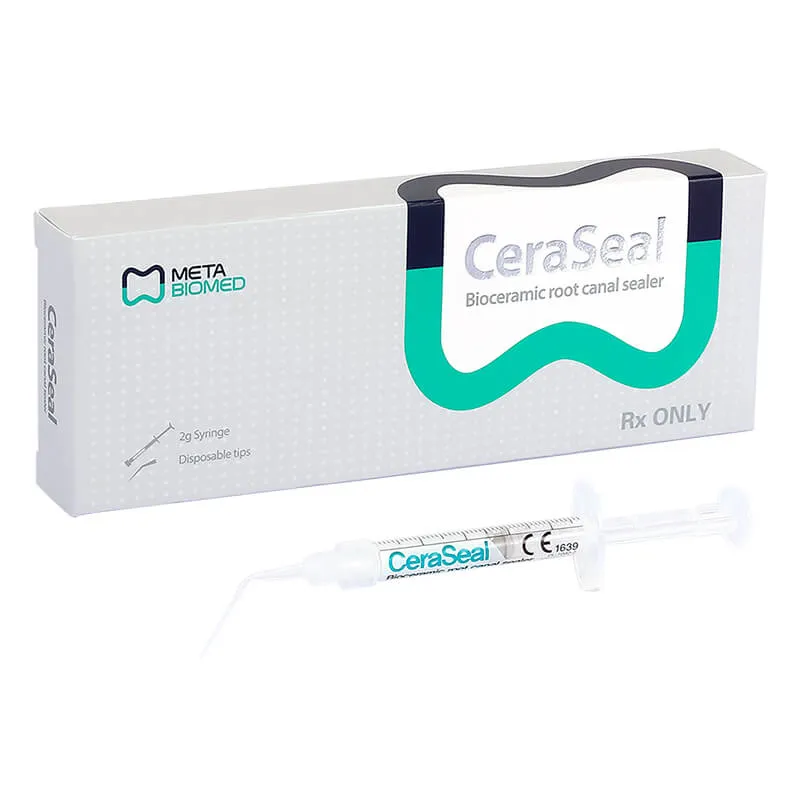
| Bioceramic sealer, premixed | CeraSeal (Meta Biomed), One-Fil (Mediclus), Cerafill RCS (Prevest DenPro) | Cold single-cone; check heat tolerance per product | No mixing; syringe delivery; set depends on moisture |
| Bioceramic putty | CeraPutty (Meta Biomed), MTA Plus, RetroMTA, PD MTA White | Repairs, root-end fillings, pulp capping, apexification | Not a flowing sealer |
| Epoxy resin sealer | AH Plus paste tubes (Dentsply Sirona) | Lateral condensation, warm vertical, single cone | Long working time; mix to a homogeneous cream |
| Resin sealer, non-epoxy | Any-Seal RC (Mediclus) | Cold techniques | Dual syringe |
| Zinc oxide eugenol | Endomethasone N (Septodont), Endofill | Lateral condensation | Traditional, economical, resorbable if extruded |
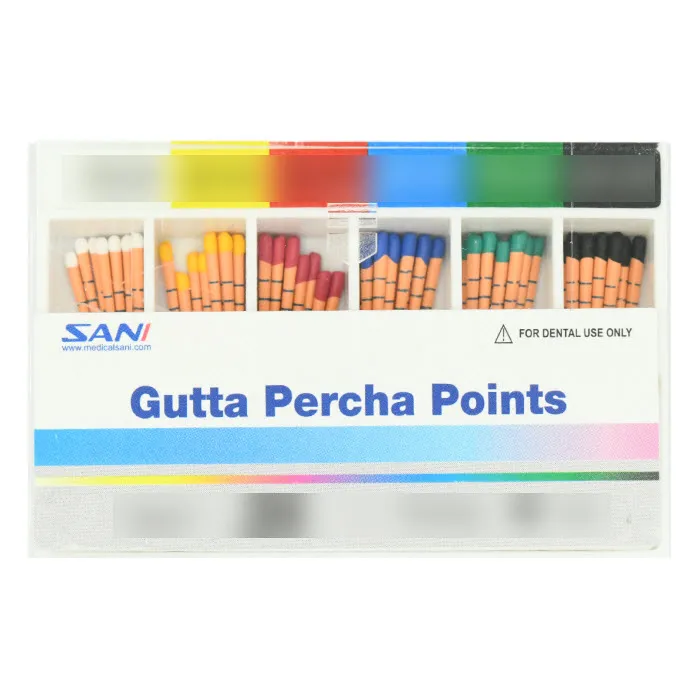
Gutta-percha in matched tapers (.04 and .06, and F1 to F3 for ProTaper-style sequences) and paper points complete the obturation set. For warm techniques we stock obturation pens and gutta-percha bars.
Compare: sealer by technique and by case
| Criterion | Bioceramic sealer | Epoxy resin sealer |
|---|
| Obturation technique Manufacturer | Cold single cone with a matched taper; heat only if the product allows | Lateral, warm vertical, continuous wave, single cone |
| Handling Manufacturer | Premixed syringe, no mixing, short delivery time into the canal | Mix two pastes; long working time |
| Setting Manufacturer | Needs moisture; slow in a very dry canal | Chemical set, hours; unaffected by canal moisture in practice |
| Clinical success Evidence | Comparable to AH Plus in the available randomised trial | Comparable; decades of data |
| Extrusion Manufacturer | Generally tolerated; sets in tissue fluid | Tolerated once set; unset material is more irritating |
| Retreatment Evidence | Studies disagree; hard set and adhesion can leave residue | Responds to solvents; bonds to dentine; residue also reported |
| Cost per canal Practice | Higher per gram; small volumes used | Lower per canal in a tube; waste from mixing |
Choose bioceramic if you shape with a rotary system, obturate with a single matched cone, and want the fewest steps. Choose epoxy if you warm-condense or laterally condense, treat wide or irregular canals where the cone does not fit closely, or want the sealer with the longest record. Many clinics keep both.
Recommended products
Bioceramic sealers and the putty for repairs:
Buying advice
Compare CeraSeal, One-Fil and AH Plus on price per canal for your case volume: a 0.5 g bioceramic syringe covers a handful of canals, a 2 g syringe or an AH Plus tube covers many more. Buy gutta-percha in the taper of the file system you shape with, and keep a bioceramic putty for the perforation or open apex that arrives without warning.